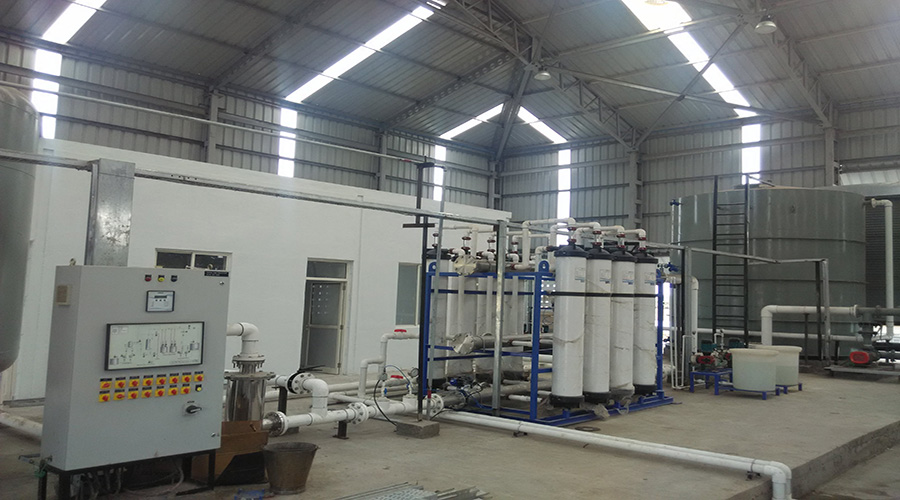
Ultrafiltration (UF) is a low-pressure membrane process that effectively removes suspended solids, bacteria, viruses, colloids, and high molecular weight organic matter from water. With larger pore sizes and higher permeability, UF systems operate efficiently at lower pressures, making them more cost-effective than nanofiltration or reverse osmosis (RO).
 Low-pressure operation with reduced energy consumption High removal efficiency for bacteria,
viruses, and pyrogens Consistent treated water quality, regardless
of feed water fluctuations Minimal use of chemicals and low maintenance
Industrial water treatment Pretreatment to RO systems (brackish and
seawater) Pharmaceutical – protein
concentration and separation Food & Beverage – juice
clarification, sugar refining, whey and cheese processing Pulp & Paper – bleach plant effluent
treatment and lignin recovery Municipal water – potable water
production, wastewater recycling Membrane Bioreactors (MBRs)
Low-pressure operation with reduced energy consumption High removal efficiency for bacteria,
viruses, and pyrogens Consistent treated water quality, regardless
of feed water fluctuations Minimal use of chemicals and low maintenance
Industrial water treatment Pretreatment to RO systems (brackish and
seawater) Pharmaceutical – protein
concentration and separation Food & Beverage – juice
clarification, sugar refining, whey and cheese processing Pulp & Paper – bleach plant effluent
treatment and lignin recovery Municipal water – potable water
production, wastewater recycling Membrane Bioreactors (MBRs)UF systems commonly use hollow fiber membranes, offering a high surface area and efficient filtration. This configuration supports periodic backwashing, which removes accumulated materials and extends membrane life.